Category:

Consulting firm on Argentina oil

“Most of the fields in Argentina are mature, and they are declining in production. A lot of investment [$20 billion per year] is needed to sustain production. This is having an impact on production curve now [with the rig count down from 112 in 2014 to 64 in February].”

Alejandro Gagliano, a partner at Giga Consulting in Buenos Aires
Posted On :
Category:

Peak Oil Review – 4 Apr 2016

The six-week long surge in oil prices which pushed the price of crude up by roughly 50 percent seems to be coming to an end with prices down 6 percent last week. Looming behind the price increase was the notion that the world’s major crude exporters would to get together and sign an agreement to freeze production at current levels. Supporting the price jump was an increase in US gasoline consumption as prices fell to levels not seen in decades and the never ending hope that the US economy was about to get better. Much of the surge was caused by the liquidation of the unprecedented short futures positions that hedge funds and other speculators had built up during the nearly two-year slide of oil prices. When oil fell below $30 a barrel, many speculators figured that the long price slide was over and that oil was unlikely to go much lower. The resulting liquidation of positions which pushed up prices was the largest on record.

Posted On :
A former Opec insider tells how global oil pricing got flipped on its head

Former OPEC insider tells how global oil pricing got flipped on its head

(The National) From 2004 to 2008 and 2010 to 2014, oil production and prices both rose. The price increases were completely divorced from the market principle of a supply-demand balance. In the middle of 2014, the price momentum ran out of steam and prices began sinking in a bog of unconsumed, overproduced, expensive new oil.

That market disorder should have been a reason for concern. Unfortunately, greed suppressed the voices that raised the alarm and warned of the long-term dangers of short-term gains.

Posted On :
Category:

Saudi Arabia Plans $2 Trillion Megafund for Post-Oil Era: Deputy Crown Prince

(Bloomberg) Saudi Arabia is getting ready for the twilight of the oil age by creating the world’s largest sovereign wealth fund for the kingdom’s most prized assets.

Over a five-hour conversation, Deputy Crown Prince Mohammed bin Salman laid out his vision for the Public Investment Fund, which will eventually control more than $2 trillion and help wean the kingdom off oil. As part of that strategy, the prince said Saudi will sell shares in Aramco’s parent company and transform the oil giant into an industrial conglomerate.

Posted On :
Category:

Saudi Arabia will only freeze oil production if Iran joins plan

(Bloomberg via WorldOil.com) RIYADH — Saudi Arabia will only freeze its oil output if Iran and other major producers do so, the kingdom’s deputy crown prince said, challenging the country’s main regional rival to take an active role in stabilizing the over-supplied global crude market.

The warning by Mohammed bin Salman, 30, who’s emerged as Saudi Arabia’s leading political force, leaves the outcome of a meeting between OPEC and other big oil producers this month in question. Iran has already said it plans to boost its production after the lifting of sanctions following a deal to curb the country’s nuclear program.

Posted On :
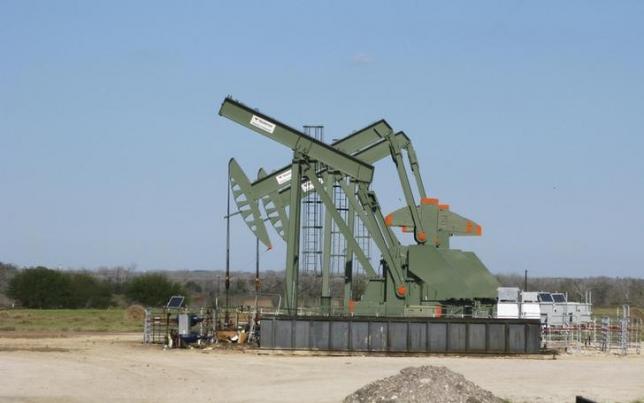
A pump jack stands idle in Dewitt County, Texas January 13, 2016.   REUTERS/Anna Driver
Category:

As U.S. shale drillers suffer, even the bankrupt keep pumping oil

(Reuters) A pump jack stands idle in Dewitt County, Texas January 13, 2016. As oil prices nosedived by two-thirds since 2014, a belief took hold in global energy markets that for prices to recover, many U.S. shale producers would first have to falter to allow markets to rebalance.

With U.S. oil prices now trading below $40 a barrel, the corporate casualties are already mounting. More than 50 North American oil and gas producers have entered bankruptcy since early 2015, according to a Reuters review of regulatory filings and other data. While those firms account for only about 1 percent of U.S. output, based on the analysis, that count is expected to rise.

Posted On :

US Shale Oil Production Costs Fell by 30% from Decade High

(EconomicCalendar.com) Costs associated with shale oil exploration and production decreased by a third in 2015 thanks to implementation of more effective technologies. Experts are certain that this could affect crude oil prices in the short term.

Costs beared by US shale producers shrunk by 25-30% last year in comparison to their decade high in 2012. This is attributed to the usage of advanced technology that improved the effectiveness of both well drilling and post-drilling well development, according to research conducted by the energy industry consultant IHS Global Inc. and commissioned by the Energy Information Administration (EIA).

Posted On :

Peak Oil and Runaway China: A Dangerous Combination of Memes

(CFA Institute) Back in 2005, investors heard an endless chorus in the financial media around two memes: the end of oil, and the growth of China.

Oil production was supposedly hitting its upper limits. In 2005, the US Department of Energy published a study on the peaking of world oil production (.PDF) that stated:

Because oil prices have been relatively high for the past decade, oil companies have conducted extensive exploration over that period, but their results have been disappointing [….] This is but one of a number of trends that suggest the world is fast approaching the inevitable peaking of conventional world oil production [….] The world has never faced a problem like this [….] Previous energy transitions (wood to coal and coal to oil) were gradual and evolutionary; oil peaking will be abrupt and revolutionary.

Posted On :

Why rigs deactivation doesn’t matter much?

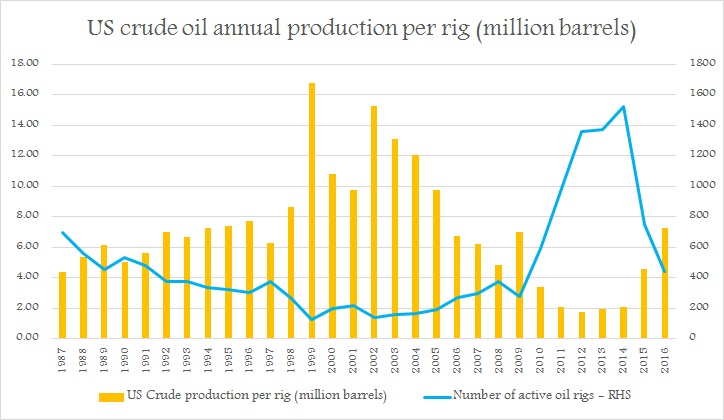
(Econotimes) According to latest numbers from Baker Hughes, number of active oil rigs operating in United States has dropped to lowest levels since 2008/09 financial crisis. While back in October, 2014, the number of active rigs were at 1609 but as of last week it declined further by 15 rigs to 372, lowest since November, 2009.

In recent times, some market participants have taken note of the rig count to increase bullish bets on oil price recovery, suggesting drop in number of rigs indicating further declining in investments. However, our analysis suggests, when it comes to oil price recovery by changing fundamentals, other than intraday or few days boost, rigs count doesn’t matter much.

Posted On :
Category:

Platts Bentek analyst & Rystad’s head of analysis comments on the oil & gas sector

[Regarding natural gas prices:] “Going into summer, producers know it’s going to be a massacre.”

Sami Yahya, a Platts Bentek analyst.

“Global demand and supply will balance very quickly because we’re seeing an extended decline from producing fields.”

Per Magnus Nysveen, Rystad’s head of analysis, saying the world oil market will re-balance this year.

Posted On :