
Falling knives and dead cats: When will the oil slump end?

(Reuters) As oil traders have learned time and again, picking a bottom in today’s glutted global market can be a fool’s game: just when prices start to rebound, as they have three times this year, a wave of renewed bearishness smacks them back down.

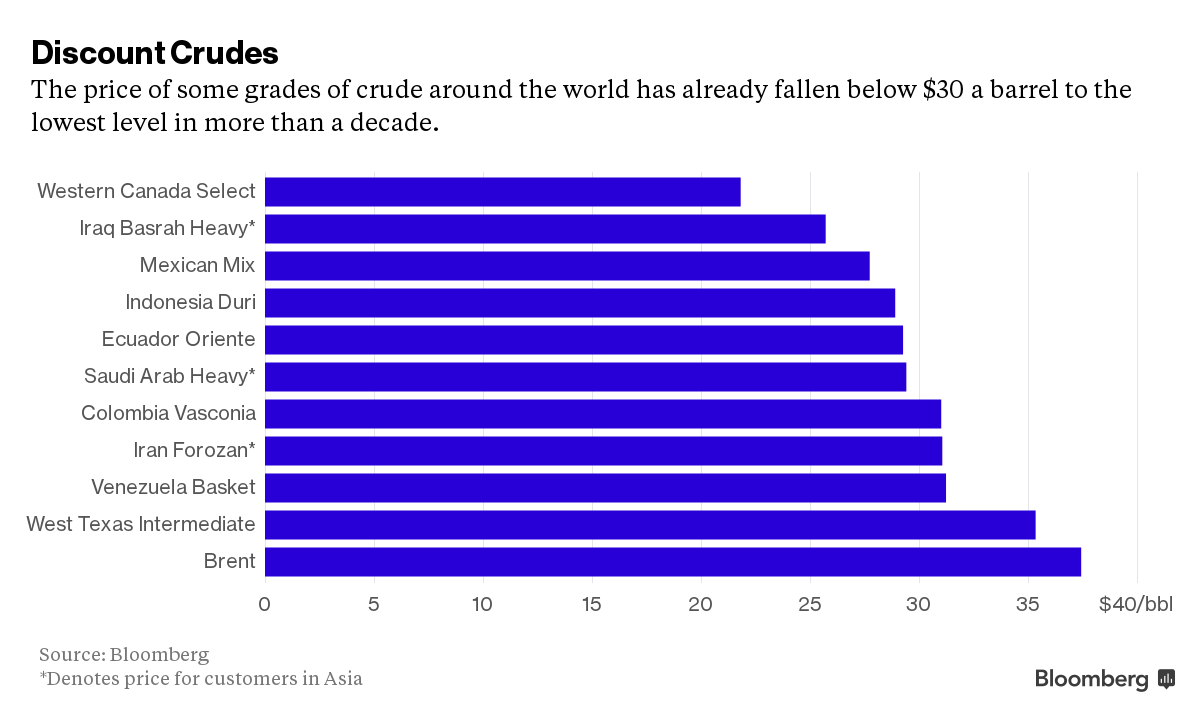
With oil resuming its southward march due to yet more oversupply, closing in on $35 a barrel after trading at $100 in June 2014, any number of factors could indicate when the rout may finally be over – for real this time.
Posted On :

The Global Battle for Oil Market Share

(Wall Street Journal) Pumpjacks for an oil well near Williston, N.D. What will the global oil market look like in 2016? This year is closing out with the industry in turmoil. The price of oil is hovering in the mid-$30s a barrel, supplies are swamping the market, the U.S. is on the cusp of ending its decades-old oil-export ban, and geopolitical rivalries continue to sow uncertainty.

Posted On :

Oil Price Scenarios for 2016

(Energy Matters) Every year I have a bet with a good friend on where the Brent oil price will be in December the following year. Last year I estimated $56.50, my friend $99, so this year I am a clear winner, even though I’m out by about 49%. Brent is trading at $38 as I write. I can extract little satisfaction from this since I got “close” for the wrong reasons.

Posted On :

Warning – an “oil theologist” is needed to interpret the given resources and reserves in World Energy Outlook 2015

(Aleklett’s Energy Mix) This year’s big news regarding the reporting of oil reserves in World Energy Outlook 2015 is that this annual report now discusses “resources that are technically possible to produce” and what proportion of these are proven reserves. When I was working on Chapter 17, The Peak of the Oil Age for my new book a few weeks ago I discussed the difference between technically producible resources and reserves.

Posted On :

India’s Oil Consumption Primed For Growth As Economy Thrives

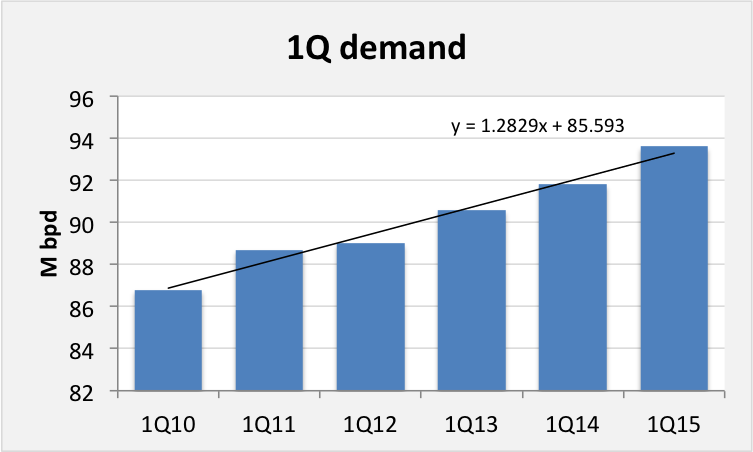
(OilPrice.com) The EIA recently published a global oil consumption data sheet that provided a clear picture of where the global oil economy is currently heading. The data revealed that although there had been a substantial oil consumption increase in the Middle East (led by Saudi Arabia), Asia (Led by China) and Oceania, the rest of the world which included Russia , other FSU countries, the U.S., Japan and Europe experienced a consistent decline in their oil consumption rates over the last decade.

Posted On :

Q&A with Daniel Yergin: US shale boom shaking up the global energy order

(Nikkei) Oil prices remain stuck at low levels, unaffected by the waves of risk washing over the world amid mounting geopolitical tension. What is driving that trend, and how long will it last? The Nikkei Asian Review put these and other questions to Daniel Yergin, vice chairman of research company IHS and a world-renowned expert on oil prices.

Posted On :