
Category:

As U.S. shale drillers suffer, even the bankrupt keep pumping oil

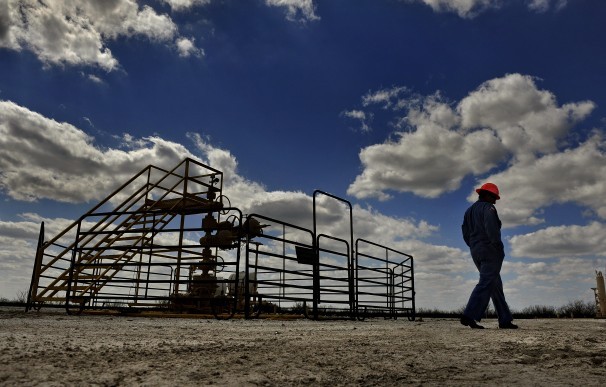
(Reuters) A pump jack stands idle in Dewitt County, Texas January 13, 2016. As oil prices nosedived by two-thirds since 2014, a belief took hold in global energy markets that for prices to recover, many U.S. shale producers would first have to falter to allow markets to rebalance.

With U.S. oil prices now trading below $40 a barrel, the corporate casualties are already mounting. More than 50 North American oil and gas producers have entered bankruptcy since early 2015, according to a Reuters review of regulatory filings and other data. While those firms account for only about 1 percent of U.S. output, based on the analysis, that count is expected to rise.

Posted On :

US Shale Oil Production Costs Fell by 30% from Decade High

(EconomicCalendar.com) Costs associated with shale oil exploration and production decreased by a third in 2015 thanks to implementation of more effective technologies. Experts are certain that this could affect crude oil prices in the short term.

Costs beared by US shale producers shrunk by 25-30% last year in comparison to their decade high in 2012. This is attributed to the usage of advanced technology that improved the effectiveness of both well drilling and post-drilling well development, according to research conducted by the energy industry consultant IHS Global Inc. and commissioned by the Energy Information Administration (EIA).

Posted On :
Oildanger

Peak Oil and Runaway China: A Dangerous Combination of Memes

(CFA Institute) Back in 2005, investors heard an endless chorus in the financial media around two memes: the end of oil, and the growth of China.

Oil production was supposedly hitting its upper limits. In 2005, the US Department of Energy published a study on the peaking of world oil production (.PDF) that stated:

Because oil prices have been relatively high for the past decade, oil companies have conducted extensive exploration over that period, but their results have been disappointing [….] This is but one of a number of trends that suggest the world is fast approaching the inevitable peaking of conventional world oil production [….] The world has never faced a problem like this [….] Previous energy transitions (wood to coal and coal to oil) were gradual and evolutionary; oil peaking will be abrupt and revolutionary.

Posted On :

Why rigs deactivation doesn’t matter much?

(Econotimes) According to latest numbers from Baker Hughes, number of active oil rigs operating in United States has dropped to lowest levels since 2008/09 financial crisis. While back in October, 2014, the number of active rigs were at 1609 but as of last week it declined further by 15 rigs to 372, lowest since November, 2009.

In recent times, some market participants have taken note of the rig count to increase bullish bets on oil price recovery, suggesting drop in number of rigs indicating further declining in investments. However, our analysis suggests, when it comes to oil price recovery by changing fundamentals, other than intraday or few days boost, rigs count doesn’t matter much.

Posted On :

Oil Price May Have Bottomed Out But China’s Flat Demand Spells Trouble

(Forbes) As the Brent front-month futures contract stabilizes either side of the $40 per barrel level, and WTI lurks within that range too, a comment by the International Energy Agency that the “oil price may have bottomed out” has triggered a lot of market interest.

In its monthly oil forecast for March, the IEA, which advises on energy policy matters of industrialized nations, noted that non-OPEC oil production would fall by 750,000 barrels per day (bpd) in 2016, compared with its previous estimate of 600,000 bpd. Specifically, US production is forecast to decline by 530,000 bpd this year.

Posted On :
Category:

The big bust in the oil fields

(Washington Post) Tilden, Tex. — He’d borrowed from banks and investors and retirement funds, all in a frenzied mission to drill for oil and gas, and by the time Terry Swift realized he’d gone too far, this was his debt: $1.349 billion.

His company, founded by his father almost 40 years earlier, had plunged into bankruptcy and laid off 25 percent of its staff. Its shares had been pulled from the New York Stock Exchange. And now Swift was in a company Chevrolet Tahoe, driving back to the flat and dusty place where his bets had gone bust.

Posted On :

IMF: Oil Prices And The Global Economy – It’s Complicated

(Seeking Alpha) By Maurice Obstfeld, economic counsellor and director of research at the International Monetary Fund; Gian Maria Milesi-Ferretti, deputy director in the Research Department of the International Monetary Fund; and Rabah Arezki, chief of the Commodities Unit in the IMF Research Department

Oil prices have been persistently low for well over a year and a half now, but as the April 2016 World Economic Outlook will document, the widely anticipated ” shot in the arm ” for the global economy has yet to materialize.

Posted On :

Why North-American Oil Is Positioned To Win In The Long-Run

(oilprice.com) Did U.S. investors complete the U.S. E&P’s revolutionary transformation of the global oil market at the end of February?

Very possibly, yes. At a time when oil companies large, medium, and small were cutting more from 2016 capex budgets, Americans were expressing their confidence in the U.S. E&P’s sector’s future, pouring $9.2 billion in new equity into the beleaguered sector.

Posted On :
Category:

An Unlikely Victim Of Oil’s Collapse: Krispy Kreme

(Forbes) Despite humble beginnings in North Carolina, Krispy Kreme has bet big on international expansion in recent years, with nearly three quarters of its 1,100 donut shops now located abroad.

Yet, with plunging oil prices wreaking havoc around the world, there are some places where it probably wishes it hadn’t set up shop.

Posted On :
Category:

Drillers Can’t Replace Lost Output as $100 Oil Inheritance Spent

(Bloomberg) Here’s Why This Is Only the Fourth Time Oil Has Tanked. For oil companies, the legacy of $100 crude is starting to run dry.

A wave of projects approved at the start of the decade, when oil traded near $100 a barrel, has bolstered output for many producers, keeping cash flowing even as prices plummeted. Now, that production boon is fading. In 2016, for the first time in years, drillers will add less oil from new fields than they lose to natural decline in old ones.

About 3 million barrels a day will come from new projects this year, compared with 3.3 million lost from established fields, according to Oslo-based Rystad Energy AS.

Posted On :